How Paul Encountered God: From Persecutor to Apostle
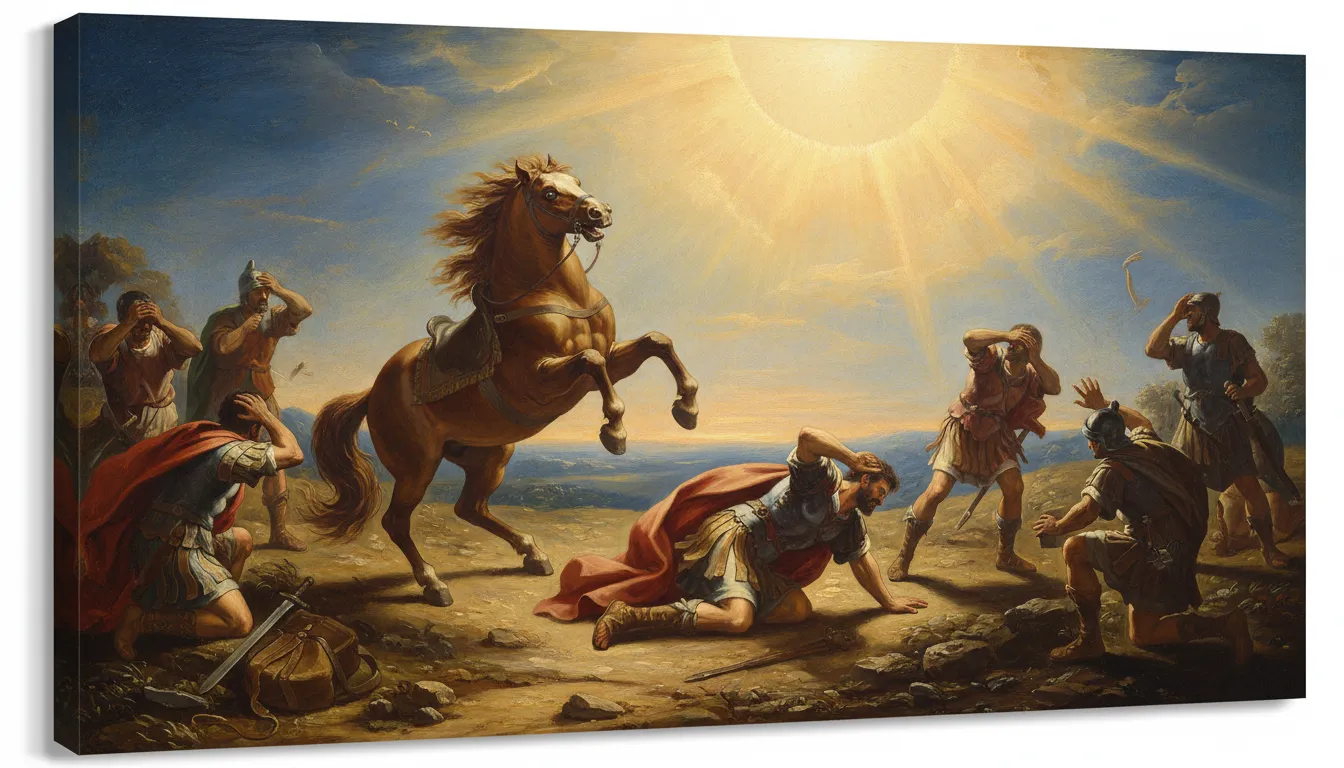
He was hunting them down. Armed with letters of authority, breathing threats and murder against the followers of Jesus, Saul of Tarsus rode toward Damascus with a singular mission: to destroy the early church. He was convinced he was serving God. He was absolutely certain he was right.
Then everything changed in an instant.
A light from heaven—brighter than the midday sun—blazed around him. He fell to the ground, blinded and helpless. And then he heard a voice that would reshape not only his life but the entire course of Christian history: “Saul, Saul, why are you persecuting me?” (Acts 9:4)
In that moment, the greatest persecutor of the church began his transformation into its greatest missionary.
The Man Before the Encounter
To understand the magnitude of Paul’s transformation, we must first understand who Saul was before Damascus. He was no casual opponent of Christianity. He was its most zealous enemy.
Born in Tarsus, educated under the renowned rabbi Gamaliel in Jerusalem, Saul represented the elite of Jewish religious scholarship. He described himself as “a Hebrew of Hebrews; in regard to the law, a Pharisee; as for zeal, persecuting the church; as for righteousness based on the law, faultless” (Philippians 3:5-6).
This was not a man searching for God. This was a man who believed he had already found Him. Saul’s identity, his purpose, his entire understanding of righteousness was built on his religious performance. He was doing everything right according to the law.
And that made his encounter all the more devastating—and all the more transformative.
When God Interrupts
The Damascus road experience teaches us something crucial about how God often works: He interrupts. He doesn’t wait for us to be ready. He doesn’t send a polite invitation. Sometimes He breaks into our lives with blinding clarity precisely when we’re running in the wrong direction.
Acts 9:3-6 records the encounter:
“As he neared Damascus on his journey, suddenly a light from heaven flashed around him. He fell to the ground and heard a voice say to him, ‘Saul, Saul, why do you persecuting me?’ ‘Who are you, Lord?’ Saul asked. ‘I am Jesus, whom you are persecuting,’ he replied.”
Notice Saul’s question: “Who are you, Lord?” In Greek, the word is kyrios—it can mean simply “sir,” but it also means “Lord” in the divine sense. In that question, we see Saul’s world collapsing and reconstructing simultaneously. He recognized he was encountering supreme authority, but everything he thought he knew about that authority was being overturned.
Jesus identified Himself not just as the risen Lord, but as the one Saul was persecuting. In attacking the church, Saul had been attacking Christ Himself. This revelation—that Jesus and His people are inseparably united—would become foundational to Paul’s later theology of the church as the body of Christ.
Three Days of Darkness
After the encounter, Saul was led by the hand into Damascus. For three days, he neither ate nor drank. He sat in darkness, blind.
These three days represent something profound. Saul’s physical blindness mirrored the spiritual blindness that had characterized his entire life. All his learning, all his zeal, all his certainty—had led him to persecute the very God he claimed to serve.
In the darkness, everything Saul had built his identity upon was stripped away. His religious credentials, his righteous works, his certainty about who was right and who was wrong—all of it crumbled. He had to learn that what he considered gain was actually loss (Philippians 3:7).
This is often how transformation begins. Not with addition, but with subtraction. Not with gaining new things, but with losing the false things we clung to.
The Role of Community: Ananias
God could have restored Saul’s sight directly. Instead, He sent Ananias—a disciple who had every reason to fear this notorious persecutor.
When Ananias hesitated, expressing his very reasonable concerns about Saul’s reputation, God’s response was clear: “Go! This man is my chosen instrument to proclaim my name to the Gentiles and their kings and to the people of Israel” (Acts 9:15).
Ananias obeyed. He laid hands on Saul and said, “Brother Saul, the Lord—Jesus, who appeared to you on the road as you were coming here—has sent me so that you may see again and be filled with the Holy Spirit” (Acts 9:17).
The word “brother” is significant. Before Saul had done anything to prove his conversion, before he had made any restitution, before he had any track record of faithfulness, Ananias called him brother. This is grace embodied in human community.
Paul’s encounter with God happened on the road. But his integration into the family of God happened through another person. Divine encounter and human community work together.
A New Identity, A New Mission
Something remarkable happened when Saul’s sight was restored: “something like scales fell from Saul’s eyes, and he could see again” (Acts 9:18). The metaphor is powerful. What had blinded him wasn’t just the light—it was the accumulated layers of self-righteousness, religious certainty, and misguided zeal that had covered his spiritual eyes for years.
The man who emerged from that house in Damascus was fundamentally different. Same intellect, same passion, same tireless energy—but now directed by grace rather than law, by love rather than judgment, by the Spirit rather than the letter.
Saul became Paul. The persecutor became the apostle. The one who destroyed the church became its most effective builder.
What Paul’s Encounter Teaches Us
1. No One Is Beyond Reach
If God could transform Christianity’s greatest enemy into its greatest advocate, no one is beyond His reach. Paul himself later wrote, “Here is a trustworthy saying that deserves full acceptance: Christ Jesus came into the world to save sinners—of whom I am the worst” (1 Timothy 1:15).
This wasn’t false humility. Paul genuinely understood the depths from which he had been rescued. And because of that, he could never lose hope for anyone else.
2. Transformation Is Often Sudden, Always Ongoing
Paul’s encounter was instantaneous. In a flash of light, his entire worldview collapsed and was rebuilt. Yet the implications of that moment took a lifetime to unfold. He spent years in Arabia processing what had happened. He spent decades working out the theological implications. He grew in understanding until his final breath.
Your own encounter with God might be dramatic or quiet, sudden or gradual. But however it begins, transformation is always ongoing. We are being “transformed into his image with ever-increasing glory” (2 Corinthians 3:18).
3. Our Past Becomes Our Platform
Paul’s history as a persecutor wasn’t erased—it was redeemed. It became the very thing that gave his testimony such power. When he spoke of grace, his audience knew he understood its depths. When he wrote about the futility of religious performance, his words carried the weight of personal experience.
God wastes nothing. The very things in your past that shame you most can become the platform from which you proclaim His grace.
4. Encounter Leads to Mission
Paul’s experience wasn’t meant to be private. From the moment of his conversion, he was given a mission: to proclaim Christ’s name to Gentiles, kings, and Israel. His encounter wasn’t the destination—it was the starting point.
Every genuine encounter with God propels us outward. We receive so that we can give. We are transformed so that we can participate in the transformation of others.
Encountering God Today
Paul’s experience was unique in its historical significance, but the pattern it reveals applies to all believers. God still interrupts lives. He still breaks through certainty and self-righteousness. He still transforms persecutors into proclaimers.
Perhaps you, like Saul, have been running in a direction you believed was right. Perhaps your certainties are beginning to crack. Perhaps you’re in a season of darkness, waiting for scales to fall from your eyes.
The same Christ who met Saul on the Damascus road is alive today. He still asks questions that dismantle our defenses. He still offers grace that transforms enemies into family. He still calls the most unlikely people to the most significant missions.
Through ChristianAI, you can explore Paul’s journey more deeply—asking questions, wrestling with his teachings, and discovering how his encounter with Christ might illuminate your own spiritual path. Have a conversation with Paul himself about grace, transformation, and what it means to be radically changed by an encounter with the living God.
A Prayer Inspired by Paul’s Transformation
Lord Jesus, You met Saul in his certainty and broke through his defenses with blinding light. Meet us in our own blindness. Interrupt our misguided paths. Strip away the scales of self-righteousness that keep us from seeing You clearly. Transform us as You transformed Paul—not just once, but continually. Use our past as a platform for Your grace. Give us a mission that flows from our encounter with You. We are willing to be undone so that we might be remade. Amen.
Explore more stories of divine encounters: Discover how Moses spoke with God through obedience and courage, learn how to talk to God in this AI era, and see how people throughout the Bible talked with God.